


What is the TSA Uniform?
The TSA uniform is the official attire worn by Transportation Security Administration (TSA) officers who work at airports across the United States. It serves both a practical and symbolic role in aviation security.
Key features of the TSA uniform
1. Distinctive appearance
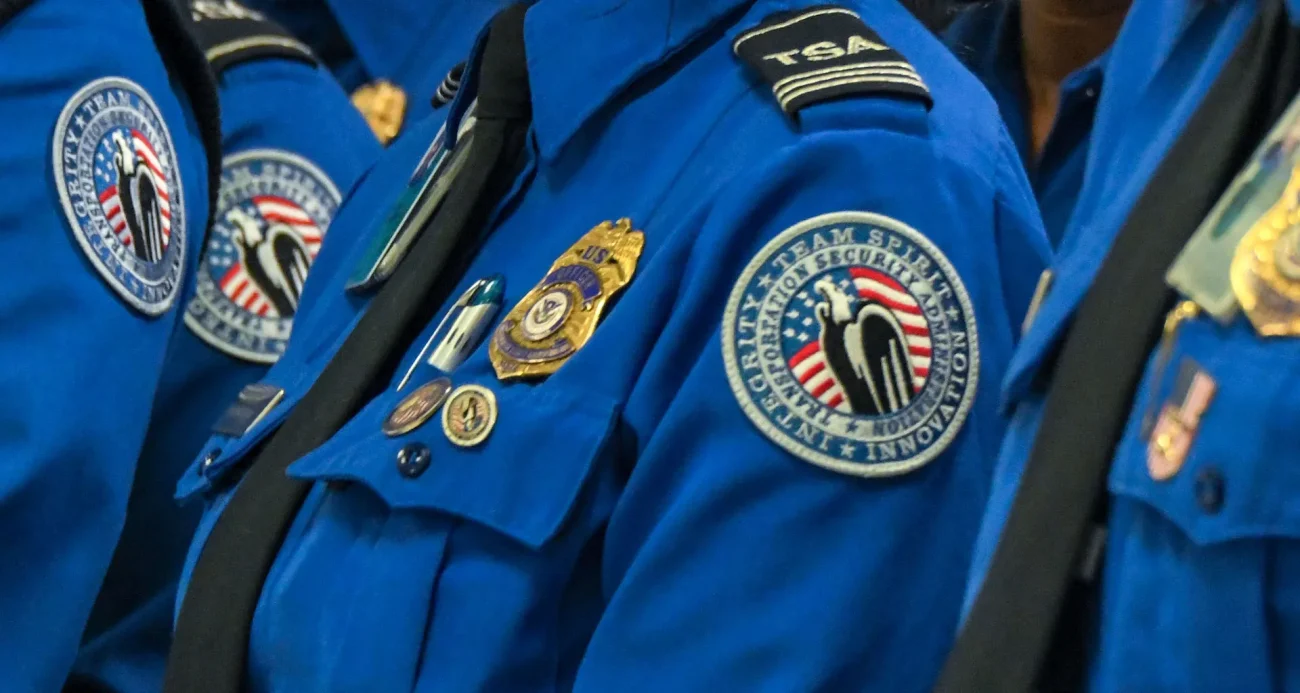
- Typically, a dark blue shirt with a TSA patch and a silver badge on the sleeve.
- Black or navy pants, a belt, and sometimes a tie for certain roles.
- Comfortable shoes suitable for long hours of standing and walking.
2. Badges and insignia
- Officers wear badges with unique identification numbers.
- Patches, rank insignia, and nameplates indicate their role and authority.
3. Designed for function.
- Made of durable, comfortable fabrics to support long shifts.
- Allows freedom of movement for bag checks, pat-downs, and rapid response.
- Some versions include a utility belt or radio and tool accessories.
Purpose of the TSA uniform
• Authority and identification → Helps travelers and airport staff immediately recognize TSA officers as government security personnel.
- Traveler confidence → a professional, consistent appearance reassures travelers that security is being actively monitored.
- Deterrence → the uniform conveys federal authority, discouraging illegal or disruptive behavior.
- Operational unity → ensures that TSA officers are easily distinguishable from other airport workers, which helps coordinate security operations or emergencies.
The Transportation Security Administration (TSA) was created after the events of September 11, 2001, to strengthen airport and aviation security in the United States. While its advanced screening technologies and rigorous procedures play a major role in protecting air travel, another important aspect of TSA’s effectiveness lies in something often overlooked—the uniform.
The TSA uniform is more than just clothing. It symbolizes authority, professionalism, and safety. For travelers, it represents reassurance that trained professionals are on duty. For potential threats, it acts as a visible barrier. This article explores how the TSA uniform directly contributes to traveler safety and confidence.
The TSA Uniform as a Symbol of Authority
The most immediate role of the TSA uniform is clear identification.
- Travelers can immediately recognize TSA officers by their standard dark blue shirts, badges, and patches.
- This visibility discourages misbehavior or suspicious activity because criminals know they are being watched.
- Uniforms link TSA agents to federal authority, making it clear that they enforce national security policies, not just airport rules.
In short, uniforms establish credibility and authority, which is important in high-stakes environments like airports.
Examples of TSA / Security-Style Uniform Items & Prices
- Horace Small TA2208 Uniform Pants (TSA / security style): US $8.00 new with tags on eBay. eBay
- On a federal uniform apparel site, TSA-branded shirts, pants, vests, etc. are offered (for DHS/TSA personnel) — prices vary depending on the garment type and customization. FEDS Apparel
- Uniform Warehouse (security/uniform retailer) lists standard uniform shirts (4-pocket, short sleeve) around $16.99 USD to $21.99 USD. uniformswarehouse.com
- The TSA itself is running a solicitation for uniform items such as shirts, pants, nameplates, and emblems, meaning cost per piece must comply with government procurement standards. HigherGov
Price Ranges & What Affects Them
| Tier | Example Items | Approx Price (USD) |
| Entry-level / garment only | Pants, shirts in basic design | $8 – $25 |
| Mid-level uniform pieces | Branded shirts, pants with patches | $20 – $50 |
| Full uniform sets / custom pieces | With badges, emblems, nameplates | $50 – $150+ |
Factors that increase cost:
- Branding and insignia (TSA emblems, nameplates)
- Fabric quality (durable, stain-resistant, blended materials)
- Custom tailoring / fit
- Extras like pockets, reinforced stitching, utility belts
- Import / shipping and duty if shipping internationally
Professionalism and Passenger Trust
Air travel can be stressful—long lines, strict rules, and the general anxiety of flying. In this context, the TSA uniform has a psychological role:
• Trust: A professional, consistent appearance signals competence and preparedness. Passengers are more willing to follow someone in uniform’s instructions.
• Reassurance: Seeing uniformed officers stationed at checkpoints is a clear reminder that security is being actively monitored.
• Cooperation: A professional image increases compliance with screening procedures, making security checks smoother and faster.
Without a recognizable uniform, the TSA’s ability to gain public cooperation would be significantly reduced.
Practical Features of the TSA Uniform
Beyond the symbol, the TSA uniform is designed with practicality and function in mind:
• Standard Color and Design: A dark blue shirt with a TSA patch is instantly recognizable in crowded terminals.
• Badges and Insignia: Clear identification of authority and rank reduces confusion for travelers.
• Durable Fabrics: Officers work long shifts and require uniforms that can handle constant movement. The material allows for flexibility during pat-downs, inspections, and emergency responses.
• Safety Features: Belts and accessories can contain radios or devices to support rapid response when needed.
These functional details ensure that officers can perform their duties effectively and comfortably.
Contribution to Security Operations
Uniforms directly enhance TSA operations in a number of ways:
• Instant Identification: In an emergency, travelers and fellow staff can immediately see TSA officers for assistance.
• Distinguishable Personnel: Uniforms clearly distinguish authorized officers from civilians, reducing the risk of confusion during security operations.
• Team coordination: A consistent uniform allows TSA agents to operate more easily as a visible, unified force, especially during periods of high traffic or emergencies.
Simply put, uniforms ensure that TSA agents are easily identifiable, approachable, and operationally effective.
Psychological Effects on Travelers and Potential Risks
TSA uniforms affect how people behave at airports:
• Travelers: Uniforms provide a sense of order and predictability in an otherwise chaotic environment. Travelers feel safe knowing that security is clearly present.
• Potential risks: The mere presence of uniformed officers acts as a deterrent. It signals that trained, vigilant eyes are on the lookout, reducing the likelihood of illegal attempts.
• Balancing authority and accessibility: The TSA’s challenge is to maintain authority without intimidating travelers. A well-designed uniform strikes this balance by appearing professional but not militant.
Thus, uniforms play a role not only in security but also in shaping traveler behavior and comfort.
Challenges and Criticisms
Despite being effective, the TSA uniform faces some challenges:
1. Imitation Threats
- Criminals may attempt to imitate the TSA uniform for access or scams. This threat requires the TSA to update security features and authentication methods continually.
2. Balancing the Image
- Some critics argue that the uniform looks too authoritarian, potentially creating anxiety rather than reassurance. The TSA should carefully design clothing that reflects both power and service.
3. Updating for Modern Needs
- As society evolves, uniforms must also adapt—considering inclusion, comfort for diverse body types, and better materials for long shifts.
Conclusion
The TSA uniform is much more than a set of clothes. It represents authority, security, and professionalism, while also serving as a practical tool for everyday tasks. Travelers rely on the visibility of the uniform to feel safe, while its presence deters potential threats. In a world where millions of people pass through airports every day, the TSA uniform ensures order, instills confidence, and supports the mission of safe travel. It is a symbol of shared responsibility, reminding both officers and travelers that security is everyone’s concern.